The Rosedale Mines Railway Project
A Legacy in the Moors
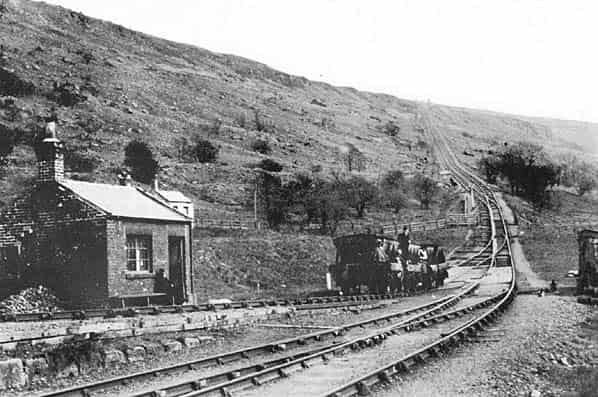
Rosedale Mines Railway had a relatively short but busy life in the second half of the 19th century. From 1861 until 1926, the railway was used to transport ironstone from the hilltop mines on the North Yorkshire moors to the steel works on Teesside and in County Durham.
The railway extended for about 20 miles from Battersby and included an incline of nearly 1 mile in length with a maximum gradient of 1:5.
The Railway operated year-round in some very harsh winter weather and the workers lived in exposed cottages some 1200 feet above sea level. It is the incline and its approaches which are the subject of this club layout.
The incline was too steep for locomotives so the prototype was operated by gravity, with loaded wagons descending and drawing up supplies and empty wagons by means of ropes wound around a drum at the incline top. Our model will use a motor in the drum house to control the rate of descent but will otherwise still rely upon gravity for operation.
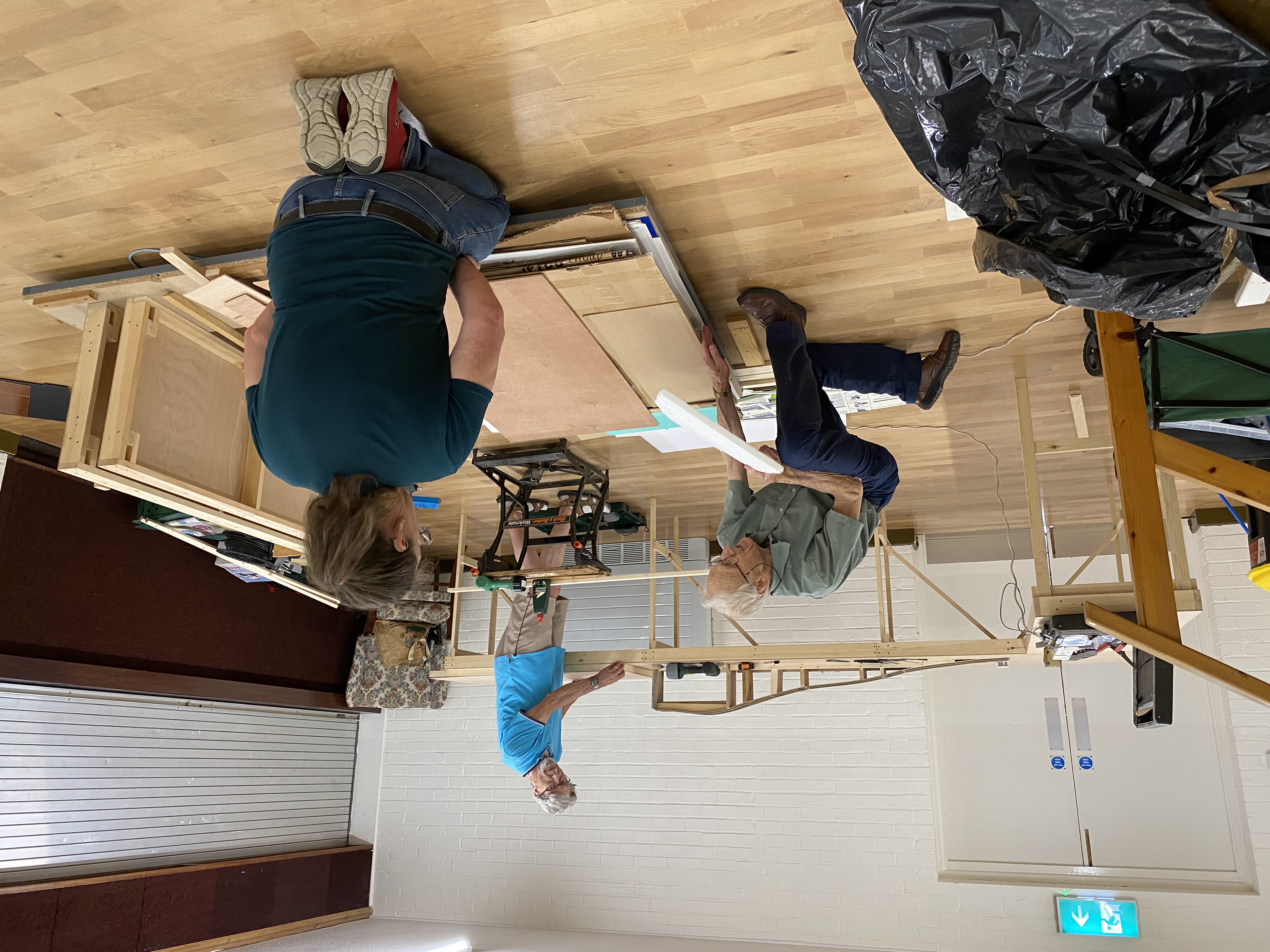
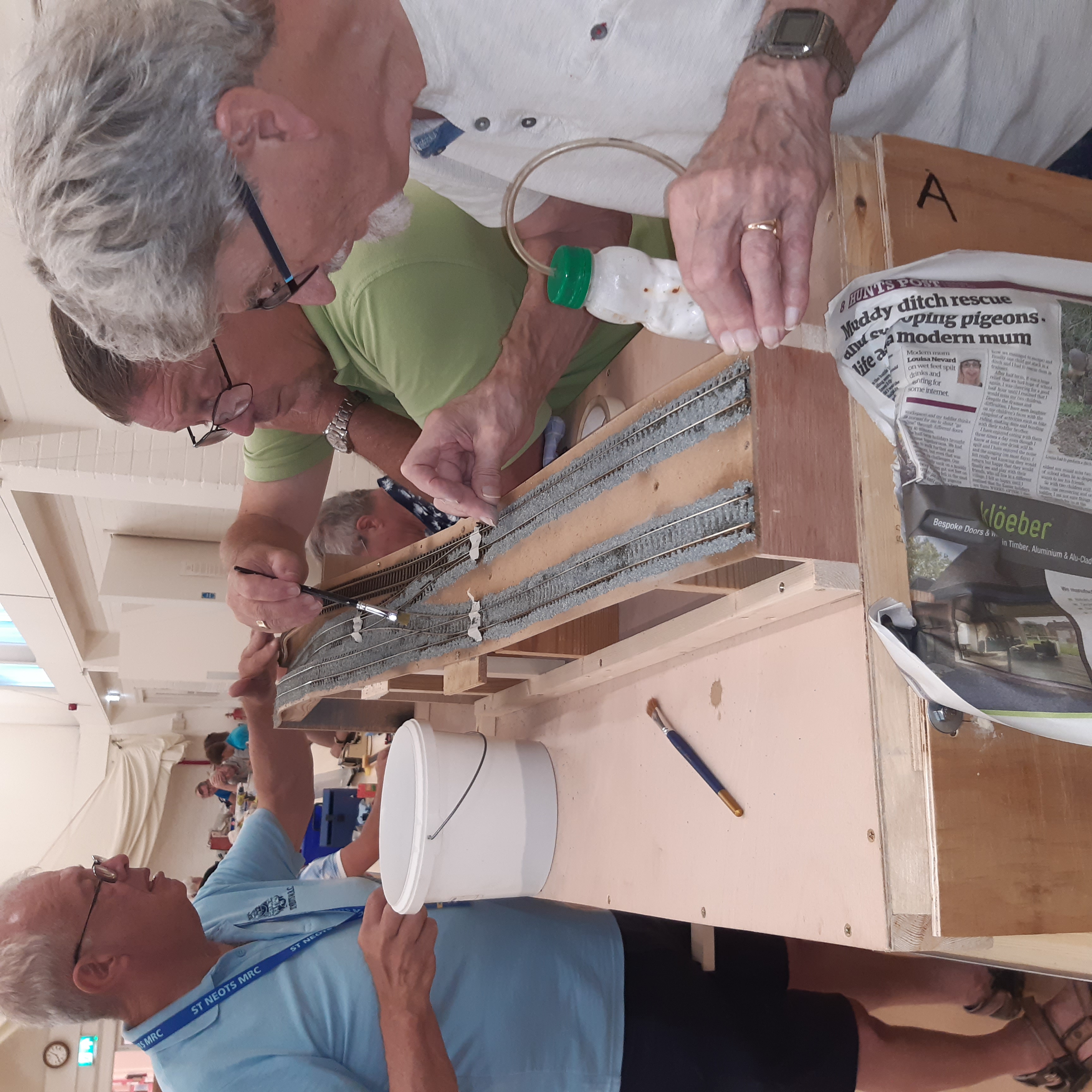
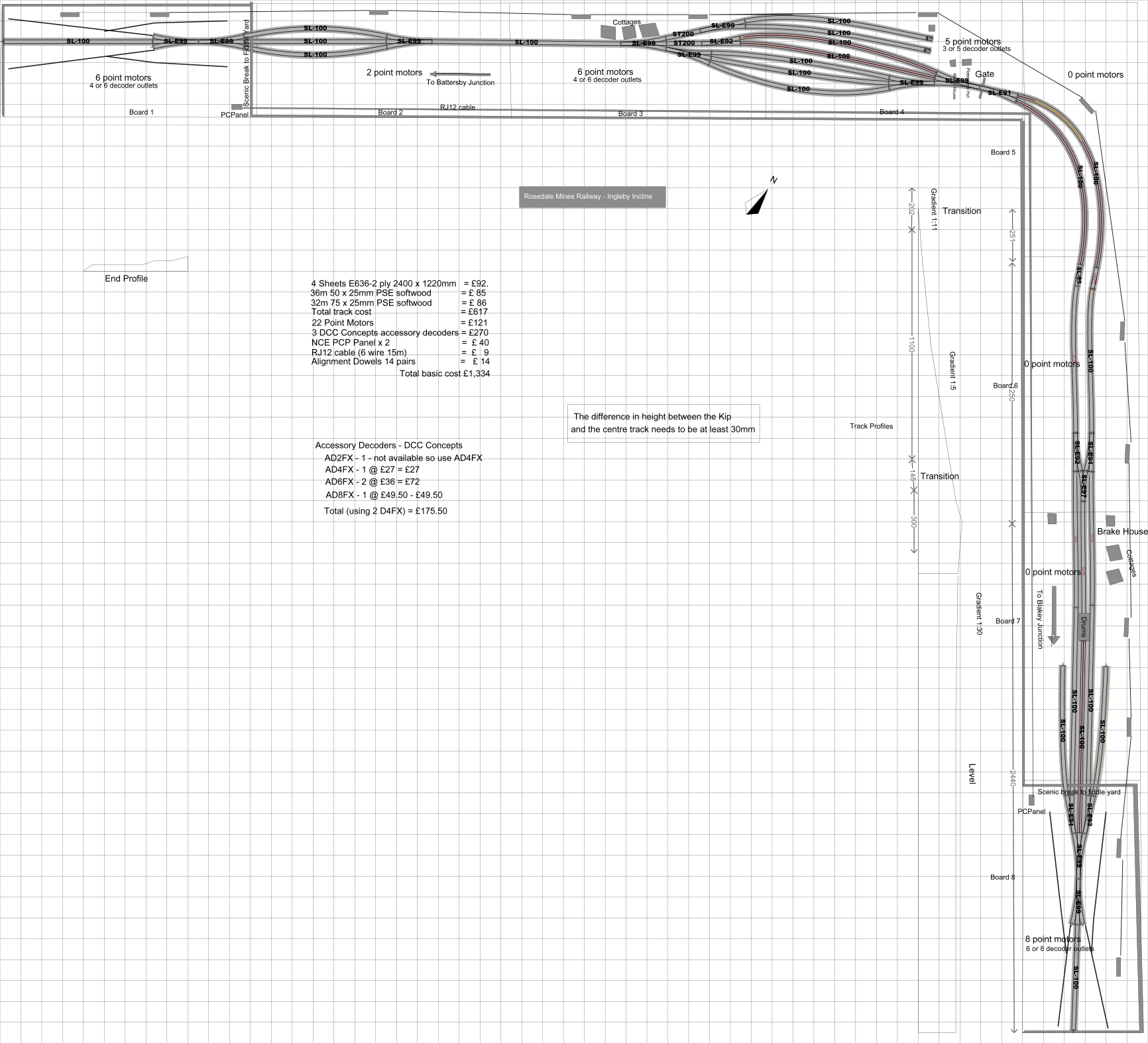
This new layout depicts the period in latter days and is constructed in OO gauge using code100 rail with Electrofrog points and DCC control. It comprises eight baseboards of 4ft x 21” each (plus a 15” extension to each fiddle yard) assembled in an ‘L’ configuration extending to 19’ x 17’3”. Our team of six members made a quick start, completing the baseboards and track laying in just a few months but we have struggled with reliability of the operation of the incline.
Sudden changes in gradient challenge most types of couplings and we need to have hands-free uncoupling; also, matching the rate of descent by gravity with the speed of the controller for the drum-house motor is tricky – get it wrong and things get into a tangle! Nevertheless, we are making progress and are beginning to think about scenery and operational procedures.


Technical Specifications
Track & Gauge
Control Systems
The layout is meticulously constructed in OO Gauge (4mm:1ft scale). We utilize Code 100 nickel silver rail for maximum durability and reliability during exhibition runs, paired with PECO Electrofrog points to ensure smooth power passage for short-wheelbase locomotives.
Operation is powered by a DCC (Digital Command Control) system, allowing for independent locomotive movement and authentic sound profiles. An unique analog-to-digital bridge controls the drum-house motor, syncronizing the gravity-fed incline rope speed with the digital throttle settings.
Scenery & Landscaping
The 'L' shaped layout spans 19' x 17'3", featuring eight distinct baseboards. The centerpiece is the 1:5 gradient incline, modeled accurately from the original Rosedale profiles. Trackwork includes transition curves designed to prevent derailments during descent.
Rolling Stock
We utilize a mix of scratch-built and modified kit rolling stock representing the 1860-1920 era. Due to the extreme inclines, stock is fitted with weighted chassis and hands-free magnetic couplings to facilitate the necessary uncoupling at the incline summit.